Loading...
Serving Palm Beach Gardens, FL and surrounding areas. (561) 576-0529
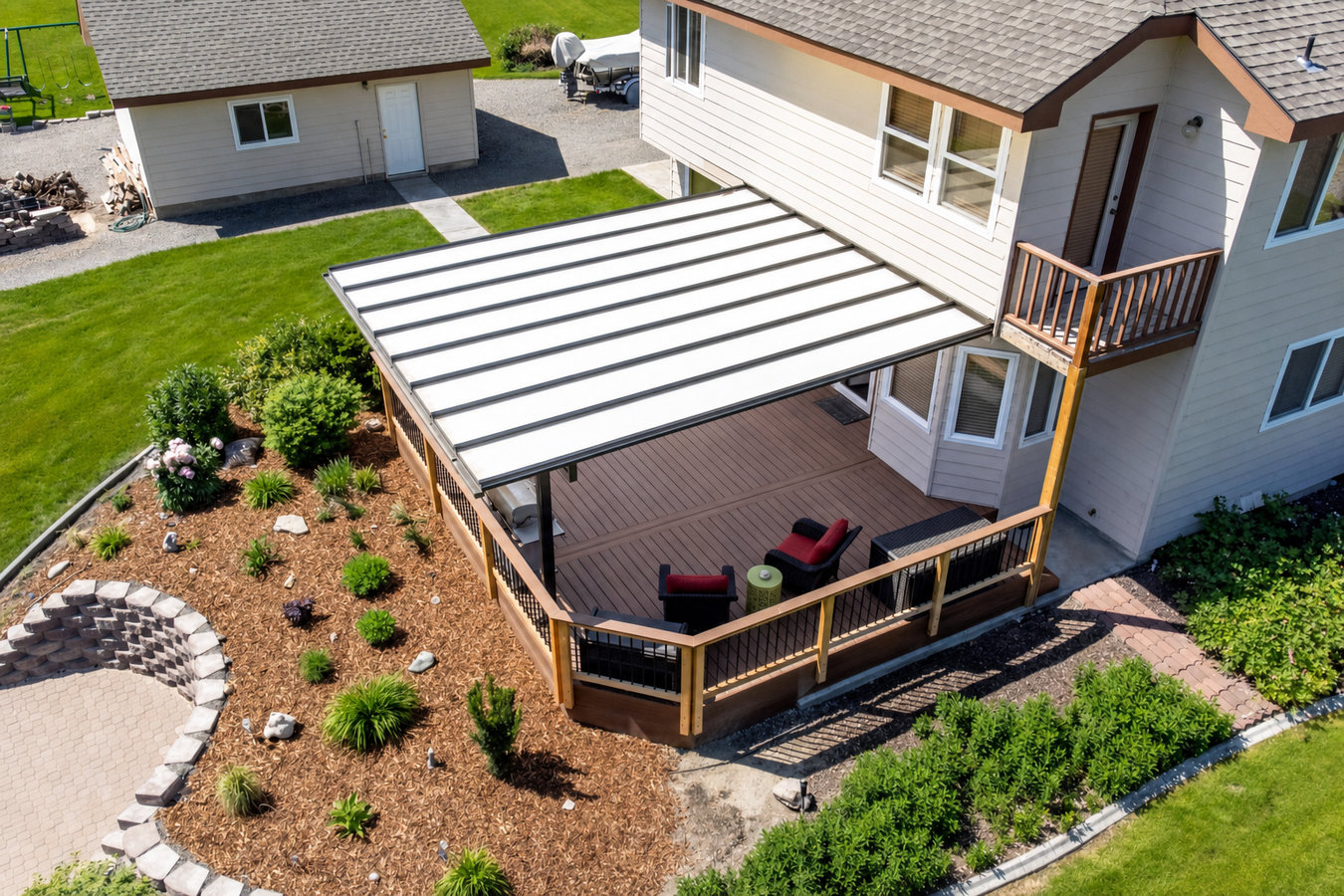
Afternoon storms and intense sun make an open patio unusable for months in Palm Beach Gardens. A properly built covered deck or patio cover gives you back your outdoor space - rain or shine.
Covered decks and patio covers in Palm Beach Gardens are permanent roof structures built over an outdoor living area - attached to your home or freestanding in your yard. Most residential projects run from $8,000 to $25,000 or more depending on size, roof type, and materials, with actual construction taking two to five days once permits are approved and materials are on site.
Palm Beach Gardens homeowners invest in covered outdoor structures because the weather here makes an open patio genuinely unreliable for much of the year. The city averages about 60 inches of rain annually, most of it falling during afternoon storms from June through September. A covered space turns those months from a write-off into some of the most comfortable outdoor living time of the year. If you want to go a step further and add insect protection, pairing a covered structure with a screened-in porch or screened deck enclosure creates a fully protected outdoor room.
Every covered structure we build is permitted through the City of Palm Beach Gardens Building Division and engineered to meet local hurricane wind requirements. In this market, that is not an upgrade - it is the only way to build something that will still be standing after a named storm and will not create a problem when you sell.
If you find yourself staying inside during the summer months because there is nowhere to sit outside without being soaked or baked, that is the clearest sign a covered structure would change how you use your home. Palm Beach Gardens gets intense afternoon storms almost daily during rainy season, and an uncovered patio or deck becomes essentially unusable for months at a time.
If cushions are bleaching out, wood furniture is cracking, or metal frames are showing rust after just a season or two, your outdoor area is taking a beating from direct sun and rain exposure. In Palm Beach Gardens, UV intensity and humidity are both high enough to destroy unprotected outdoor furniture quickly. A covered structure dramatically extends the life of everything underneath it.
If you have an older aluminum or wood patio cover that is sagging, has visible rust or rot, or was put up by a previous owner without permits, that is worth addressing before it becomes a bigger problem. Unpermitted structures in Palm Beach Gardens can complicate home sales and sometimes require removal at the owner's expense. A licensed contractor can assess whether repair or full replacement makes more sense.
In Palm Beach Gardens, outdoor living space is a genuine selling point. Buyers expect it, and a well-built covered patio or deck can make your home stand out in a competitive market. A properly permitted covered structure is a documented improvement - buyers' agents and inspectors here know to check, and an unpermitted addition can stop a deal.
We build solid-roof patio covers that block all rain and direct sunlight - the right choice for homeowners who want a space that works through Palm Beach Gardens' rainy season - as well as open-lattice and pergola-style covers that filter light and improve airflow for milder days. Material options include aluminum systems and pressure-treated lumber, with aluminum being the most practical choice for coastal South Florida because it holds up against salt air and humidity without the ongoing maintenance that wood requires. We also handle fan and lighting rough-ins during the build, because it is far easier to plan for those finishes before the roof goes up than to add them later. If you want to take the next step and fully enclose your covered space, we can coordinate the covered structure and a screened-in porch or deck enclosure together on a single project timeline.
Before we design anything, we ask about your HOA requirements. Most planned communities in Palm Beach Gardens - including PGA National, Ballenisles, and Alton - have architectural review boards that specify which materials, colors, and structural styles are permitted. We know these requirements and build them into the design from the start, so you are not redesigning the project halfway through because the review committee had a concern. Every structure is permitted through the City of Palm Beach Gardens Building Division and engineered to meet local hurricane wind requirements. For homeowners who want a freestanding outdoor structure rather than one attached to the house, a pergola installation is a companion option worth considering alongside or instead of an attached patio cover.
Best for homeowners who want complete rain and sun protection - a solid cover turns your outdoor space into a usable room even during South Florida's daily afternoon storm season.
Best for homeowners who want filtered shade and an open, airy feel - ideal for mild-weather use where full weather protection is less of a priority.
Best for homeowners who want a low-maintenance, salt-air-resistant structure that meets local wind requirements without the ongoing upkeep that wood demands.
Best for homeowners building a new elevated deck who want to include a roof cover as part of the original build - combining both projects is more cost-effective than adding the cover later.
Palm Beach Gardens averages about 60 inches of rain per year, with a rainy season that runs roughly June through September and brings daily afternoon thunderstorms. An uncovered patio in this environment is not just uncomfortable - it is genuinely unusable for months at a stretch. A covered structure that is properly sloped and sealed changes that calculation entirely, turning rainy season from a reason to stay inside into a backdrop for outdoor living. The city also sits in a high-wind zone under Florida's statewide building code, which means any permanent covered structure attached to your home must be engineered to handle hurricane-force winds. Salt air from the Atlantic reaches most neighborhoods in Palm Beach Gardens, which is why we use aluminum and pressure-treated materials rather than untreated wood or standard residential hardware that would corrode within a few years in this environment.
HOA requirements are a practical reality for most Palm Beach Gardens homeowners. Communities throughout the city have architectural review boards, and getting city permits approved does not automatically mean your HOA has signed off. Homeowners in Jupiter face similar coastal conditions and HOA complexity, and we carry the same process-aware approach to every job we take in the area. Whether you are in an established neighborhood near PGA Boulevard or in one of the newer communities further west, we understand that outdoor projects here require more planning than they do in most markets - and we plan accordingly. Homeowners in Royal Palm Beach also benefit from the same hurricane-rated construction approach we apply in Palm Beach Gardens, since the region's wind requirements apply broadly across northern Palm Beach County.
We ask a few basic questions - existing slab or new build, approximate size, HOA community or not, solid roof or open-lattice - to give you a realistic ballpark before anyone drives out. Most inquiries get a response within one business day.
We come to your home, measure the space, look at how the cover will attach to your house, and talk through roof style and material options. You receive a written quote within a few days - no vague estimates over the phone.
We submit the permit application to the City of Palm Beach Gardens Building Division and help you prepare any HOA documentation. Permit review typically takes two to four weeks. We manage the process - you do not need to visit any office or chase any paperwork.
Construction runs two to five days on site. After completion, the city sends an inspector to verify the work meets local requirements. We schedule and attend that inspection, then walk you through the finished structure so you know exactly how everything works.
Free written estimate with no obligation. We respond within one business day.
(561) 576-0529Palm Beach Gardens is in a high-wind zone where any permanent covered structure must be engineered to meet specific wind-speed requirements. We submit engineered drawings with every permit application - not an optional add-on - because a structure that is not designed for local conditions is the first thing to fail when a storm comes through. Florida Building Commission standards require it, and we build to them on every project.
We ask about your HOA requirements before we design anything, because a structure that the architectural review board rejects means starting over. We know how communities like PGA National and Ballenisles evaluate outdoor addition submissions and build that knowledge into the design from the first conversation.
Salt air reaches most Palm Beach Gardens neighborhoods, and standard residential hardware corrodes quickly here. We use materials specified for coastal conditions - powder-coated aluminum systems, pressure-treated lumber, and hurricane-rated fasteners - because the difference shows up within two or three years on a structure built with the wrong spec.
Every covered structure we build goes through the City of Palm Beach Gardens permitting process and passes a final city inspection. You receive your permit closeout documentation - keep it with your home records, because buyers' agents here know to look for it, and a permitted addition is a selling point rather than a liability.
In Palm Beach Gardens, building a covered outdoor structure means navigating coastal conditions, active building enforcement, and HOA oversight - often all at once. We have done this enough times in this market that none of those factors surprise us, and we plan for all of them before work begins.
A freestanding pergola offers open-air shade without attaching to your home - a practical alternative when HOA rules or site conditions rule out an attached cover.
Learn MoreAdd a screen enclosure around your covered patio to create a fully protected outdoor room that keeps bugs and debris out while letting the breeze in.
Learn MorePermit timelines in Palm Beach Gardens mean the sooner you start, the sooner you are using your new outdoor space. Call or request an estimate today.